
What the College Transition for Students with Learning Differences Webinar Taught Us
- Amy Kopelman

- Mar 9
- 9 min read
Updated: May 7

The move from high school to college is a big deal for any student.
For students who learn differently—and their families—it can feel like stepping off a cliff.
Hundreds of families registered for Pathlitics' recent College Transition Panel—a number that speaks to just how much this information is needed.
Transition specialist Kelley Challen, Elon University sophomore Van, and parent and clinical social worker Pam joined Pathlitics founder and CEO Amy to share first-hand perspectives on what the college transition for students with learning differences really looks like—and what families need to do now to prepare.
Here's what they had to say.
College-Capable vs. College-Ready: There's a Difference
Kelley opened with a distinction that reframes the entire conversation:
College-capable means your student can handle the academic work.
College-ready means they have the skills, systems, and independence to manage the entire college experience.
Those are not the same thing—and confusing them is one of the most common mistakes families make.
It's Not Just Grades
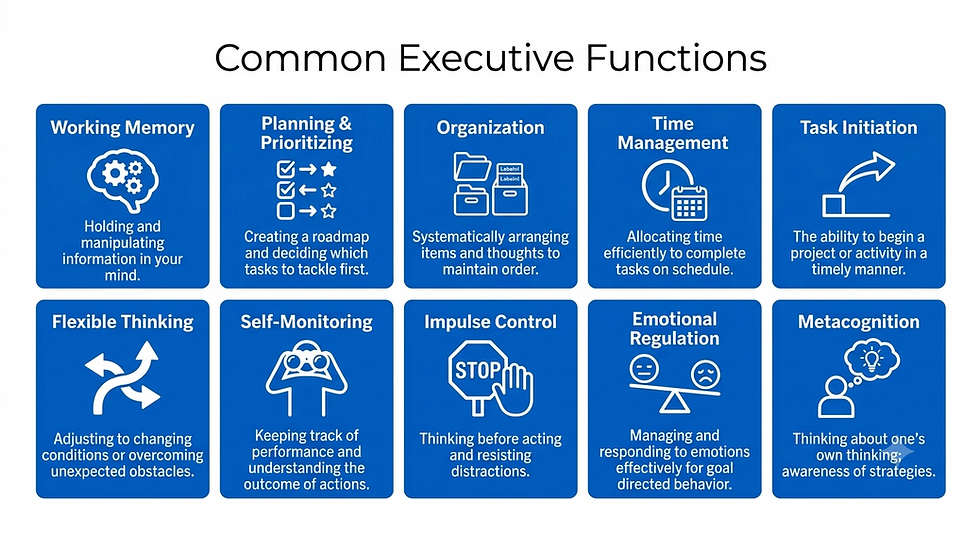
Strong academic skills don't automatically offset executive functioning gaps.
Many students who are absolutely capable of college-level work struggle not because the content is too hard, but because managing the work becomes overwhelming without the structures they had in high school.
College-readiness means being able to:
Manage large reading loads and writing assignments independently
Prepare for exams without reminders
Plan across multiple syllabi at once
Start, sustain, and finish long-term projects
Turn work in on time—through whatever system a professor uses
Self-Advocacy Isn't Optional
In high school, adults monitor, prompt, and step in. In college, that largely disappears.
Your student needs to:
Understand their own strengths and challenges
Know what supports help them
Ask for those supports proactively—before they're struggling
Kelley noted that even a legal tool like a power of attorney doesn't allow parents to negotiate accommodations on behalf of their student.
Colleges expect the student to be the primary actor.
Life Skills Matter Too
If daily routines fall apart, academics often follow. That means students also need to manage:
Sleep schedules and routines
Medications
Shared living spaces and roommates
Emotional regulation under academic, social, and personal stress

A Student's Perspective: What Actually Hit Hard
Van, a sophomore at Elon University who learns differently, offered something rare: an unfiltered, first-hand account of what the college transition actually looks like from a student's perspective — the kind of insight that is nearly impossible to find outside of platforms like Pathlitics.
College Is "Very Organizationally Based"
Van's biggest wake-up call wasn't the academic difficulty—it was the organization required to keep up.
You have to have a routine. You need to plan your week, manage your workload, and track multiple syllabi. Getting ahead of it, he said, "takes the weight off your shoulders" because you're not constantly blindsided by what's coming.
He also noticed a shift in how academic work feels:
High school often focuses on summarizing and identifying the main point.
College pushes toward critical thinking, analysis, and forming your own perspective.
The Social Side of the College Transition for Students with Learning Differences Is Harder Than People Think
Van was candid: the social aspect of college was more challenging than the academics.
Living in a dorm, eating in dining halls, not going home every day—it's a lot. And it's something families rarely talk about when they think about "college readiness."
The combination of academic demands and social adjustment is exactly why organization and emotional resilience are so important before your student ever sets foot on campus.

A Parent's Perspective: The System Is More Complicated Than You Think
Pam brought two perspectives to the panel: as a clinical social worker and as a mom who has lived this transition firsthand with her son on the autism spectrum. She shared what she wishes she had known going in.
Identity and Self-Understanding Come First
Before her son could advocate for himself, he needed to:
Understand his own strengths and areas of need
Feel more comfortable with his autism diagnosis
Learn how to articulate what support he actually needed
Her son is a strong communicator—but not when it came to sharing his diagnosis. It made self-advocacy with professors and peers much harder. That piece has to be worked on before college.
College Is Siloed in a Way K–12 Isn't
In high school, there's an IEP team and a central case manager. In college, support is fragmented across:
Disability Services
Professors
Deans
Academic advisors
Student support offices
For her autistic son—who "sees the trees, not the forest"—navigating this system required explicit coaching on where to look, who to talk to, and how to interpret social dynamics like group work.
Her advice: don't assume your student will figure out how the system fits together on their own. Work alongside them to build that map.

The Legal Shift: From IDEA to ADA
Kelley walked through how the legal framework and the practical expectations change dramatically as part of the college transition for students with learning differences.
In High School (IDEA / IEP World):
Schools must identify, evaluate, and serve students with disabilities, and provide FAPE (Free Appropriate Public Education)
Schools are actively responsible for your student's progress
In College (ADA / Section 504):
Colleges do not seek out students with disabilities
There are no IEP meetings
Students must self-identify, provide documentation, and request accommodations
The goal is access—not guaranteed success
The shift is this: High school law says, "We will help your student succeed." College law says, "Your student must advocate for equal access."
Your student needs to arrive on campus already prepared to explain their needs, present documentation, and manage the process themselves.
Accommodations and Documentation: Start Earlier Than You Think
This is where many families feel most lost—and where being proactive makes the biggest difference.
Van's Approach: Own It Before Day One
Van realized over the summer before college that every interaction had to come from him.
He scheduled his own calls with Disability Services. He submitted his neuropsychological evaluation. He emailed professors before classes even started to introduce himself and reference his accommodation letter.
His advice: start early. Disability offices get flooded as the semester begins. The earlier you reach out, the more helpful they can be. Waiting until you're already struggling makes everything harder.
He also found that understanding his recent neuropsych evaluation was invaluable—having a clear idea of his strengths and where he needed to spend more time or get support made every conversation easier.
Documentation Requirements Vary—A Lot
Kelley was clear: there is no standard documentation requirement across colleges.
Some colleges require a neuropsych evaluation completed within the last 3 years.
Other colleges accept other documentation.
Mental health accommodations may only require a letter from a doctor or therapist.
Learning disabilities often require formal testing, including timed measures.
Requirements can differ even within the same school, depending on the diagnosis.
Action step: Don't wait until your student is admitted to research this. Contact the disability office at each school on your list and ask directly: "What documentation do you require for a student with [diagnosis]?" or look on Pathlitics.
If new testing is needed, schedule it in junior year—not the summer before college. It takes time.

When Professors Push Back
Sometimes professors don’t always grant approved accommodation. When that happens:
Your student should re-engage Disability Services
Ask to meet with the professor directly, with the coordinator if needed
Consider switching sections before the add/drop deadline
Pam shared a moment when her son was effectively shamed by a professor in front of the class. He was devastated. Her approach: validate that what happened was not okay, then coach him to go through the right channels—the accommodations office, then the dean if needed—rather than stepping in herself.
Self-Advocacy in Practice: What Van Actually Does
Van offered a practical template that students can follow.
Before Classes Begin
As soon as he receives his accommodation letters from Disability Services, he emails each professor:
Briefly introduces himself
References his accommodation letter
Asks if they have any questions
It signals he's proactive and serious—and sets expectations before any conflict arises.
The First Two Weeks Are Critical
Van considers the add/drop period the most important stretch of the semester.
He uses it to observe:
Teaching style and workload
Professor attitude toward accommodations
Whether the class feels manageable

Van has dropped courses after realizing the gap between his background and the expectations was too large. His rule: with the right professor, you position yourself to succeed; with the wrong one, everything is uphill.
Build Real Relationships with Professors
Van makes a habit of staying after the first class to introduce himself, sitting near the front, and visiting office hours—sometimes just to talk, not about anything urgent.
He sees professors not just as teachers, but as part of his network. Those relationships can lead to better day-to-day support, letters of recommendation, and career opportunities.
Finding the Right College for Students with Learning Differences
The panel was unanimous: for students who learn differently, fit matters more than rankings.
What Van Looked For
Van's mother had one non-negotiable: strong Disability Resources. Beyond that, Van wanted:
Small classes (around 30 students or fewer)
A campus that wasn't overwhelming, but not so small it felt like high school
Opportunities to study abroad
A social environment where he already knew a few peers
One thing gave him real confidence: knowing other students from his high school with learning differences who were already thriving at Elon. Peer proof matters.
What Traditional Tools Miss
Pam pointed out that college fairs, guidebooks, and virtual tours often fall short for families navigating learning differences. They're overwhelming (particularly for students with sensory needs), surface-level, or just not built around the questions that actually matter for these students.
That's exactly why Pathlitics exists. Amy built the platform after going through the college search process and realized there were a dearth of tools to support students who learn differently.
Pathlitics gives families access to:
A database of 700+ colleges, gap year, and summer programs, rated on level of disability support (Level 1–4) with details.
100+ comprehensive programs for learning disabilities and 160+ for autism spectrum students.
Documentation requirements for each school, in one place.
Authentic student reviews—from students who learn differently—on academic rigor, professor understanding, campus culture, and sense of belonging.
Glimpse into what each college offers students in terms of supports – though accommodations are individualized based on need and documentation – viewing the supports that other students receive provides key insight. Without Pathlitics – only after a student enrolls and registers with disability services will they gain clarity.
Anonymous one-to-one messaging so prospective families can ask current students real questions – expanding the experience that Van had to help others connect with peers prior to college.
It's the resource this community has always needed—and it's built specifically for this search.

When Should Parents Step Back?
Kelley offered a simple gut-check:
If the parent is consistently working harder than the student across the admissions and transition process, that's a red flag.
Pam's approach with her son: let him lead, but advise behind the scenes. Suggest who to email. Talk through what to say. Validate what he's feeling. Step in only when something feels clearly wrong- shaming, discrimination, or safety concerns- and even then, coach him toward the right channels rather than taking over.
The goal isn't to let students "go it alone." It's to shift the locus of control so they're practicing adult skills with scaffolding—not having everything managed for them.
Know Your Own Profile
Van made a point that stuck with everyone: you need to be educated about your own disability.
Growing up, he wasn't allowed to read his own IEP or neuropsych report. In college, reading his evaluation helped him understand what he's strong at, what tasks take him longer, and where he needs to build in extra time.
He also faced constant misconceptions about dyslexia. His approach: explain his disability in functional terms—how it actually affects him—rather than just using labels. And choose carefully who he discloses to socially. He doesn't owe his story to everyone.
College Isn't One-Size-Fits-All
Kelley closed with an important reminder: the "traditional" path—straight to a four-year school, finishing in four years—is not the norm for most students.
Fewer than half of students who start a four-year program finish in four years. Gap years, community college coursework, part-time paths, and readiness programs are all legitimate options. For students with learning differences or mental health needs, a customized path can significantly increase the odds of long-term success.
The real question isn't "How fast can we get to a bachelor's degree?"
It's: "What path sets this student up to thrive academically, socially, and emotionally?"

Key Takeaways
The college transition for students with learning differences looks different than it does for other students—and that's okay. Here's what the panel wants every family to walk away with:
Know the difference between college-capable and college-ready—and close the gap before move-in day
Start documentation and disability office outreach as early as possible—ideally, no later than junior year
Make sure your student can describe their needs, send their own emails, and attend their own meetings
Use the first two weeks of each semester strategically—add/drop exists for a reason
Evaluate colleges on fit, support level, and culture—not just prestige
Normalize nonlinear paths; they're not a backup plan, they're often the right plan
Students who learn differently aren't less capable. They often just need different structures, more explicit planning, and communities that understand and value them. With hundreds of families registering for this conversation, one thing is clear: the need for honest, practical guidance on this transition has never been greater.
Want a Step-by-Step Guide to College Planning for Learning Differences?
Get our comprehensive email series covering:
How to assess support needs (Level 1–4)
Questions to ask disability offices
Green and red flags to watch for on campus visits
How to prepare your student for self-advocacy
Timeline for junior and senior year

Comments